
VL-R2R
Roll-to-Roll Vision Labeler
The roll-to-roll configuration places labels or auxiliary materials on continuous web substrates. Conductive fabric, flexible electronic materials and roll-based labeling are catalogue examples. Unwinding, rewinding, tension, registration marks and material stretch require particular attention. Provide roll dimensions, web width, liner details and placement pitch to define the web-handling arrangement.
Talk to our team →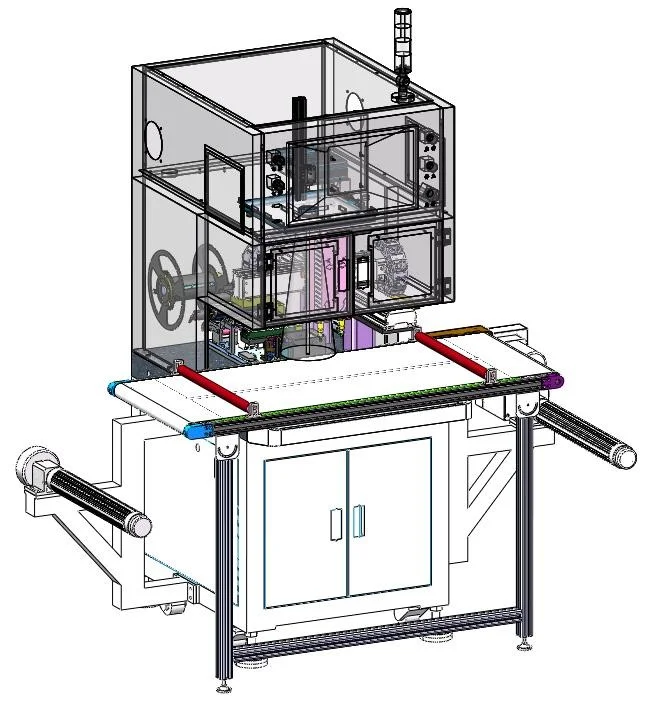
Updated:
Key technical parameters
| Applicator heads (configuration dependent) | 1 / 2 |
|---|---|
| Catalogue reference rate; subject to sample validation | 1200–2000 labels/h |
Final configuration is subject to the mutually confirmed technical proposal and quotation.
Application scope
- Roll-material processing
- Electronics and PCB
Fit requirements
Confirm the following inputs to validate fit with your product and production line.
- Part shape, dimensions, locating features, and how it is presented
- Label or auxiliary-material size, liner, adhesive, and reel size
- Target rate plus upstream/downstream equipment, signals, and available space
- Actual parts and materials for sample placement and written confirmation
Helpful information for inquiry
- Photos or drawings of the part, with the placement position marked
- A label/material sample or material datasheet
- Supply voltage, who will install the machine, and the target delivery window
Downloads & brochures
Frequently asked questions
How do I confirm this configuration fits my part?
Send the part, material, and placement position. Engineering confirms release, location, tooling, and rate from samples; catalogue rates are not a substitute for a trial. Final scope follows the written technical proposal.
Is the published rate a guaranteed output?
No. It is a catalogue reference range and changes with the part, material, locating method, and changeover. Contracted output is only stated after sample validation.
What happens after I send an inquiry?
We first confirm configuration fit, then schedule a sample or drawing review, and issue scope, lead time, and installation responsibility. Factory acceptance (FAT) is included only when it is written into the proposal.
Project inquiry
Share the essential process data and we will confirm model fit, interfaces, and delivery scope.
Talk to our team →