
VL-4A
4-Axis Robot Vision Labeler
The four-axis robot configuration supports varied products and changing placement orientations or cell layouts. The catalogue identifies electronic housings, medical-device parts and packaging components as candidate uses. Robot reach, pickup tools and fixtures depend on the actual part. Validate access and stable handling using part orientations, placement faces and changeover requirements before agreeing cycle targets.
Talk to our team →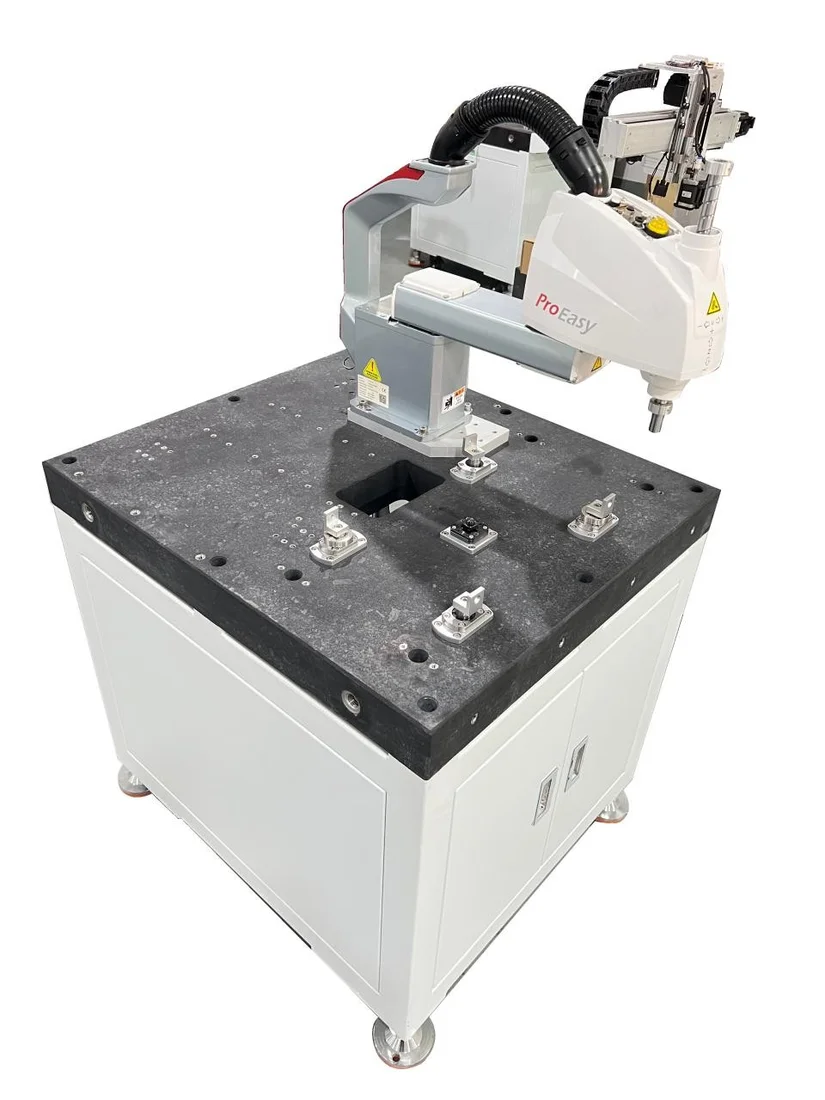
Updated:
Key technical parameters
| Applicator heads (configuration dependent) | 1 |
|---|---|
| Catalogue reference rate; subject to sample validation | 800–1500 labels/h |
Final configuration is subject to the mutually confirmed technical proposal and quotation.
Application scope
- Robotic vision placement
- Electronics and PCB
Fit requirements
Confirm the following inputs to validate fit with your product and production line.
- Part shape, dimensions, locating features, and how it is presented
- Label or auxiliary-material size, liner, adhesive, and reel size
- Target rate plus upstream/downstream equipment, signals, and available space
- Actual parts and materials for sample placement and written confirmation
Helpful information for inquiry
- Photos or drawings of the part, with the placement position marked
- A label/material sample or material datasheet
- Supply voltage, who will install the machine, and the target delivery window
Downloads & brochures
Frequently asked questions
How do I confirm this configuration fits my part?
Send the part, material, and placement position. Engineering confirms release, location, tooling, and rate from samples; catalogue rates are not a substitute for a trial. Final scope follows the written technical proposal.
Is the published rate a guaranteed output?
No. It is a catalogue reference range and changes with the part, material, locating method, and changeover. Contracted output is only stated after sample validation.
What happens after I send an inquiry?
We first confirm configuration fit, then schedule a sample or drawing review, and issue scope, lead time, and installation responsibility. Factory acceptance (FAT) is included only when it is written into the proposal.
Project inquiry
Share the essential process data and we will confirm model fit, interfaces, and delivery scope.
Talk to our team →Technical Articles
Vision Labeler RFQ Checklist: Quote Scope, Lead Time, and Acceptance
Help procurement write a comparable vision-labeler RFQ — itemized quote scope (host/vision/fixtures/install/training/tax-freight), lead-time start, and acceptance pointers.
PCB Label Before vs After Reflow: Station Timing and Film Class
Choose whether to apply PCB identity before reflow or after soldering, and frame polyimide vs polyester as a qualified materials decision for Anjelio vision label application.
PnP SMT Label Feeder (ALF) vs Dedicated CCD Vision PCB Labeler
When a pick-and-place label feeder is enough, and when you need a dedicated CCD vision labeling cell (Anjelio VL-*).
Panel-Rail vs Per-Board PCB Labeling Before Depaneling
When panel-rail (process-edge) labeling is enough, and when each child board needs its own code before depaneling.